
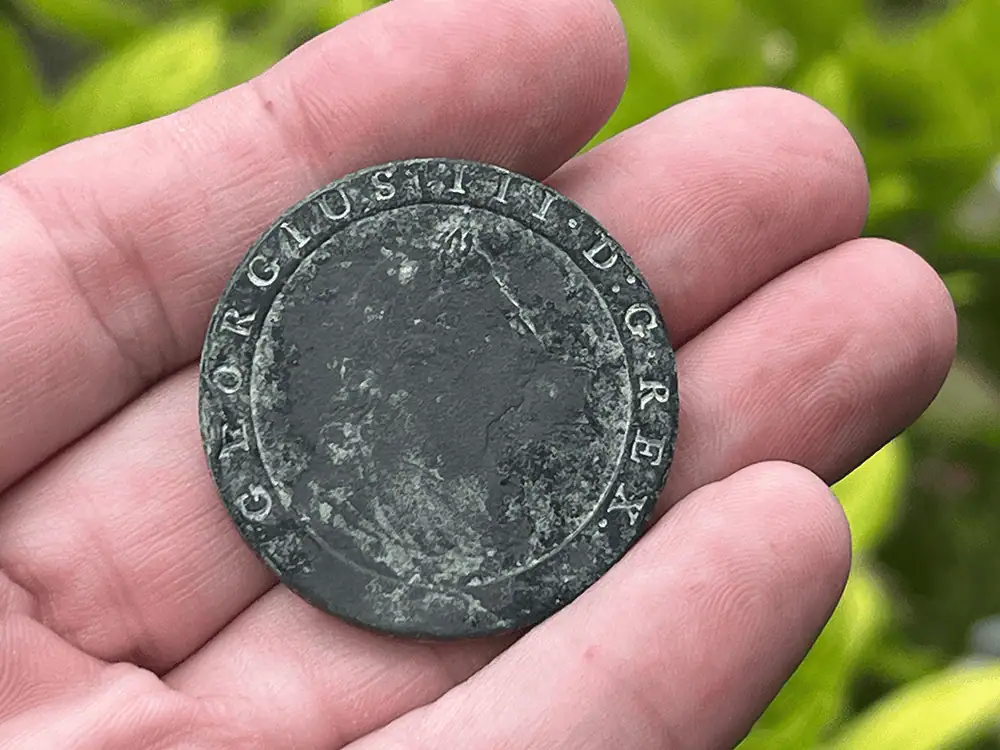
This Cartwheel penny of George III was discovered in Surrey and is in remarkably good condition — an unusual survival, as most examples unearthed in the soil are heavily corroded or worn. Issued in 1797, these large copper pennies were among the heaviest coins ever circulated in Britain, each weighing one ounce.
The Cartwheel coinage was struck at Matthew Boulton’s Soho Mint in Birmingham using steam-powered presses, a major innovation in coin production. Their great size and raised rims, which earned them the nickname “cartwheels,” were designed to discourage clipping and forgery, long-standing problems in English currency.
The obverse bears the portrait of George III, while the reverse shows Britannia seated with shield and trident, accompanied by the date in large numerals. Although impressive in concept, their sheer weight made them unpopular for everyday use, and they were only produced for a short period.
Finding such a well-preserved example in Surrey is a rare treat. It provides a direct connection to a time of industrial progress and monetary reform, when Britain was modernising its coinage in step with its growing role as a global power.
0 Comments