
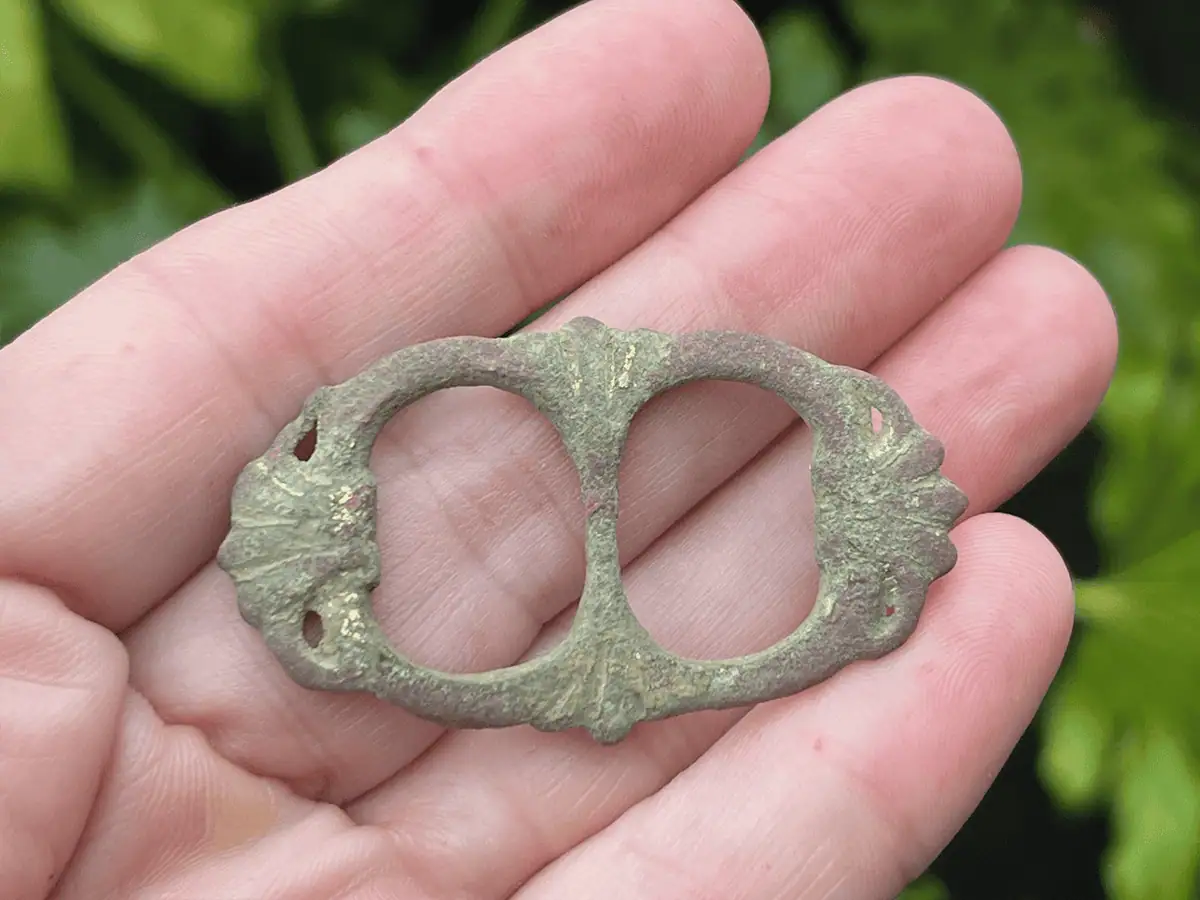
This gilded cast copper alloy double-loop oval buckle, dating to the late 16th to early 17th century, was discovered by Yanne while metal detecting in the Surrey Hills. Elegant in both form and decoration, it is a fine example of personal dress fittings from the Tudor–early Stuart period.
The buckle is formed of two oval loops joined by a central strap bar, each end of which is adorned with carefully moulded trefoil knops. Matching trefoil knops also appear on the outer edges of each loop, flanked by delicate openwork loops, giving the piece a balanced and decorative appearance. Traces of gilding survive on the surface, suggesting it was once brightly finished and intended to be seen rather than concealed.
Buckles of this type were commonly used to fasten belts, shoes, or garments, and were worn by men and women alike. The decorative trefoil motif, long associated with symbolism and ornament in late medieval and post-medieval England, reflects changing fashions of the period, when functional objects increasingly became expressions of personal status and style.
Its loss in the Surrey Hills may have occurred during everyday movement through the landscape, perhaps along a trackway, during agricultural work, or while travelling between settlements scattered across the downs and wooded valleys. In the 16th and 17th centuries, Surrey was a county of market towns, farming communities, and well-used routes connecting London with the south coast, making such losses an unremarkable but quietly human event.
Preserved in the soil for over four centuries, this buckle offers a tangible link to the people who once lived and worked in the Surrey countryside. Though small, it speaks of clothing, identity, and daily life in a period of significant social and religious change. Rediscovered today, it allows us a fleeting glimpse of a moment long past, held patiently by the landscape until returned to the light once more.
0 Comments