
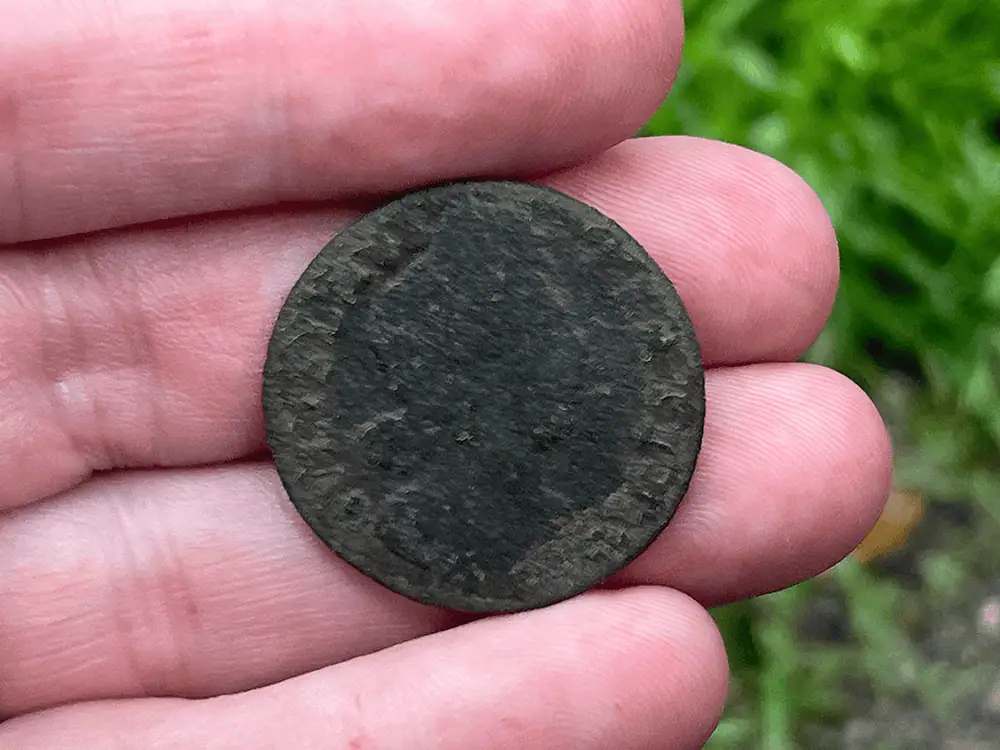
This copper halfpenny of William III was discovered by Murray in a quiet corner of a field at Dunsfold, Surrey. Struck between 1694 and 1702, after the death of Queen Mary, these coins circulated widely among ordinary people as small change for everyday transactions.
William III, also known as William of Orange, came to the English throne alongside his wife Mary II following the Glorious Revolution of 1688, which established Parliament’s supremacy over the monarchy. After Mary’s death in 1694, William ruled alone until 1702. His reign was marked by conflict with France and the strengthening of England’s role in European affairs.
The halfpenny was an essential coin of daily life, used by labourers, tradesmen and travellers in markets, inns and workshops. Made of copper and machine struck, these coins were part of the milled coinage that replaced older hammered issues, offering more uniformity and protection against clipping and forgery.
Though worn from centuries in the soil, this halfpenny serves as a modest but direct link to Surrey life at the turn of the 18th century, when even the quiet fields around Dunsfold were touched by the reach of a changing nation.
0 Comments