
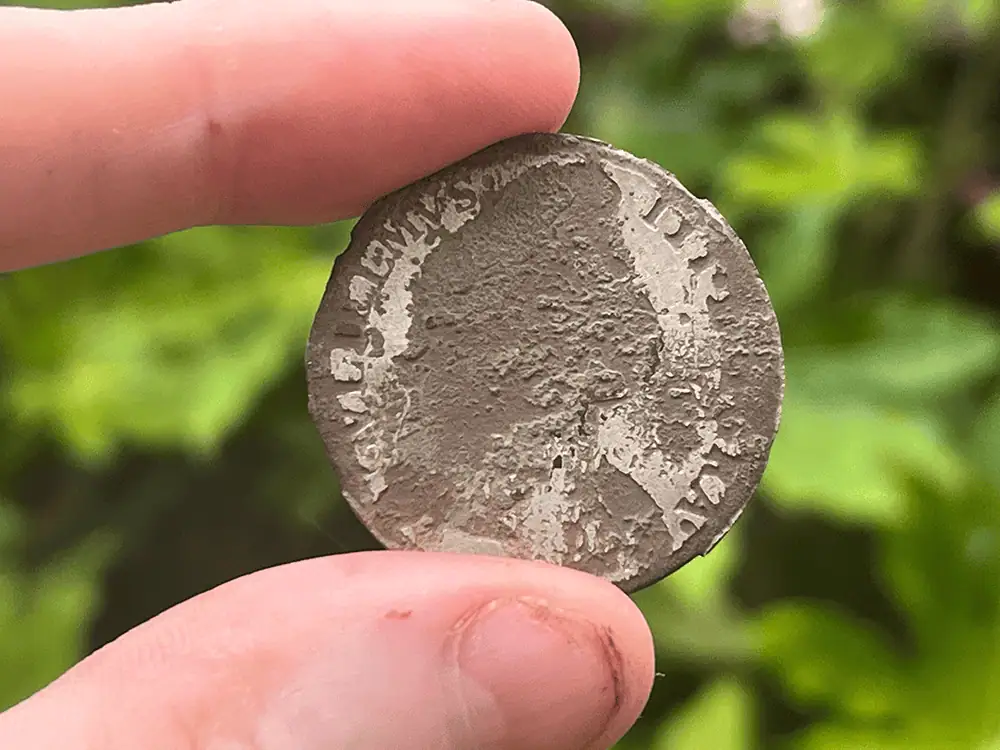
This corroded silver-plated copper alloy coin is a contemporary counterfeit of a halfcrown of William III, dating to around 1696–1699. Found in Surrey, it copies an official prototype of uncertain mint. The base copper core was coated with a thin layer of silver, giving the appearance of genuine coinage when first struck.
The technique used here is a form of Sheffield plating, an early method of fusing a thin sheet of silver onto a copper base. While originally developed for producing decorative household items in the 18th century, similar plating practices were already in use by counterfeiters in the 17th century to mimic official silver coinage. Such coins were produced to deceive in everyday transactions, and their circulation reveals both the scarcity of small silver coins and the risks taken by those who made and spent them.
Counterfeit coins like this are a reminder that the economy of late Stuart England was far from stable. Silver shortages, recoinages and the pressures of war with France made debased and forged coinage a persistent problem. Though now corroded, this false halfcrown offers an intriguing glimpse into both crime and survival in William III’s England.
0 Comments