
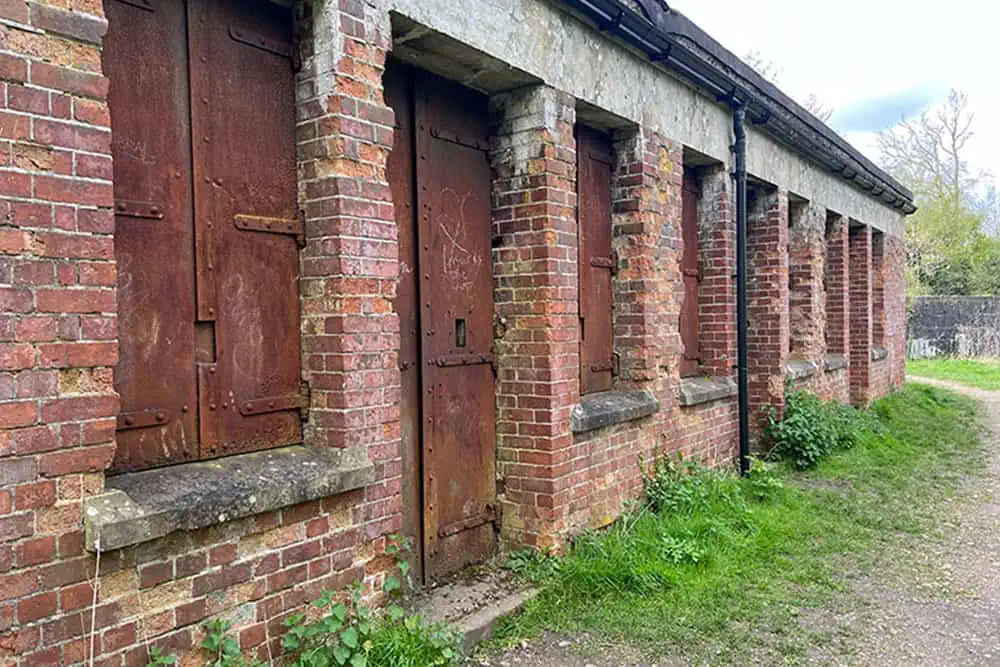
I love walking at the top of Boxhill with my dog Woody, we can often be found trudging down the wooded paths and tracks. One of the things we pass on our walks is the Boxhill fort, which just seems to have always been there. So much so that I don’t give it a second thought. But recently I decided to find out a bit more about it and its history. Here is what I found out.
Perched atop the rolling hills of Surrey above the town of Dorking, stands the Box Hill Mobilisation Centre, a historic structure that has stood the test of time since its construction in the late 19th century.
The centre was part of an ambitious plan known as the Defence of London, developed in 1880 to safeguard the capital in the face of rising tensions with other European powers. The plan included a strategically mapped out defence line running from Guildford along the North Downs to Fort Halstead then up the west side of the Darenth Valley to Dartford and north of the Thames from Vange by Brentwood to North Weald.
To support this line, a series of fortified storehouses, known as “points d’appui” or mobilization centres, were proposed. These centres would serve as strongholds for troops and a storage area for ammunition, equipment, and supplies. And so, in 1889, the acquisition of the sites for these “Forts” was approved.
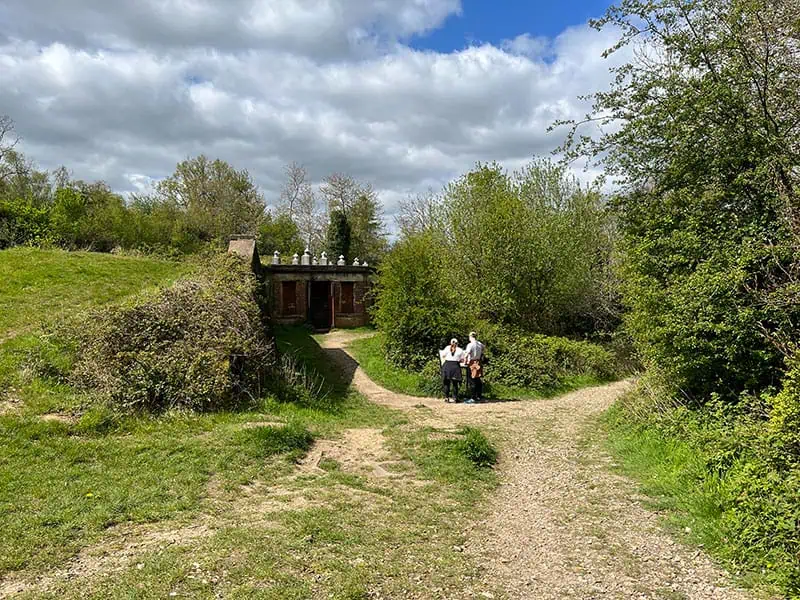
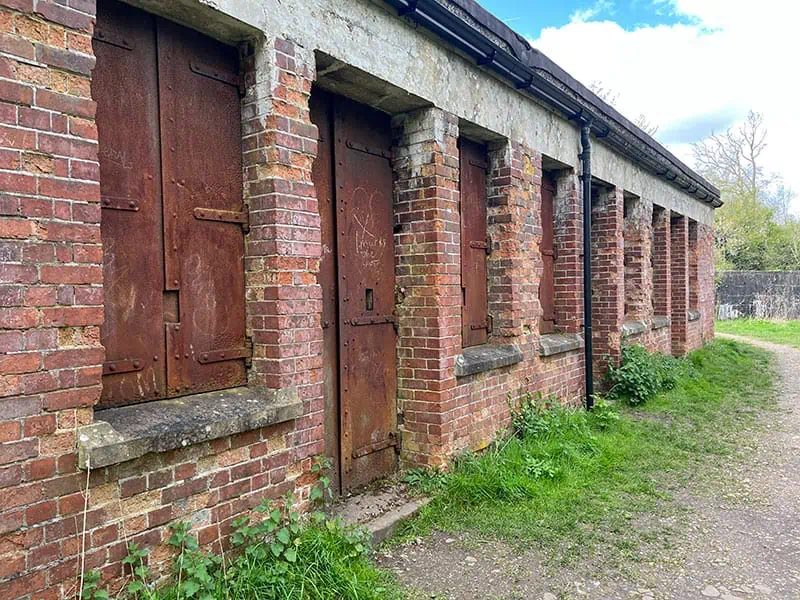
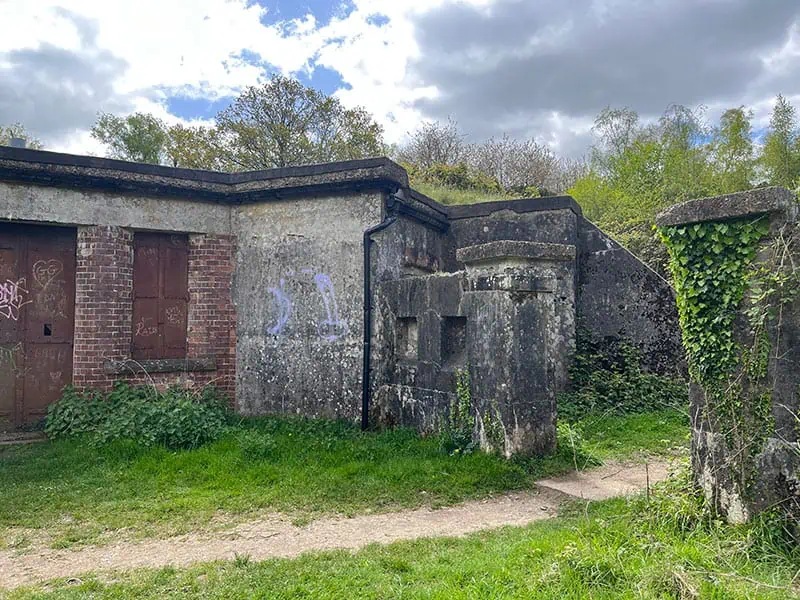
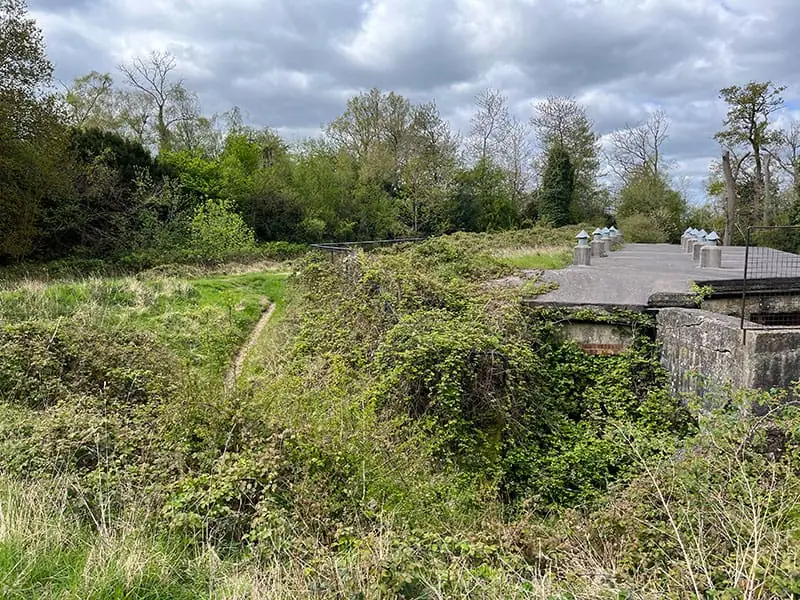
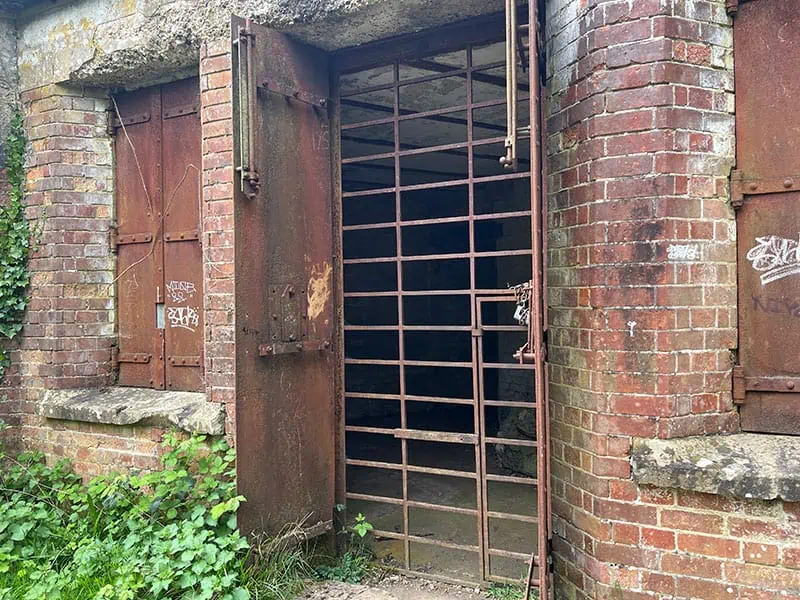
The Box Hill Mobilisation Centre was a bunker-like structure, with 5 ammunition stores flanked by reinforced walls and firing holes. The iron doors and window shutters have since corroded, and the brickwork has deteriorated, but the surrounding earthworks remain in good condition.
The centre also included a large, crescent-shaped earthen blast-bank and an outer ditch for added protection. To the south-east, around 110 meters away, stood the original caretaker’s lodge and tool store, which have now been repurposed for use as a visitor centre and offices.
During its construction, Box Hill was just one of thirteen mobilisation centres built along the projected stop-line. However, with the restoration of confidence in the Royal Navy by 1905, the need for such centres diminished. By 1907, the scheme was officially abandoned, and the sites were gradually sold off.
Despite years of neglect and some modern repairs, the Box Hill Mobilisation Centre still stands as a tangible reminder of a pivotal moment in British history. It is a rare and unique structure, with its surviving elements showcasing the ingenuity and tenacity of those who built it. Today, it continues to draw visitors, eager to learn about its rich past and experience a piece of history firsthand.
If you are planning a trip to Boxhill in Surrey, the fort is only a short walk from the National Trust carpark and is great place for kids to play soldiers and for grown up kids to sit back and relax with a cup of tea from the nearby National Trust cafe.


Written by Murray Price
Murray is a member of the Bearded Bleepers metal detectorists. Based in Epsom Downs, during the day he runs his own web design company, but his true passion lies in exploring the countryside with his fellow Bleepers, searching for hidden treasures. He also loves spending time walking the Surrey Hills with his rescue dog, Woody.
Share this post...
0 Comments